How to organize a small bathroom
without crowding it
The goal is not to hide everything. It is to keep daily items reachable, wet items drainable, backups visible, and maintenance access open.
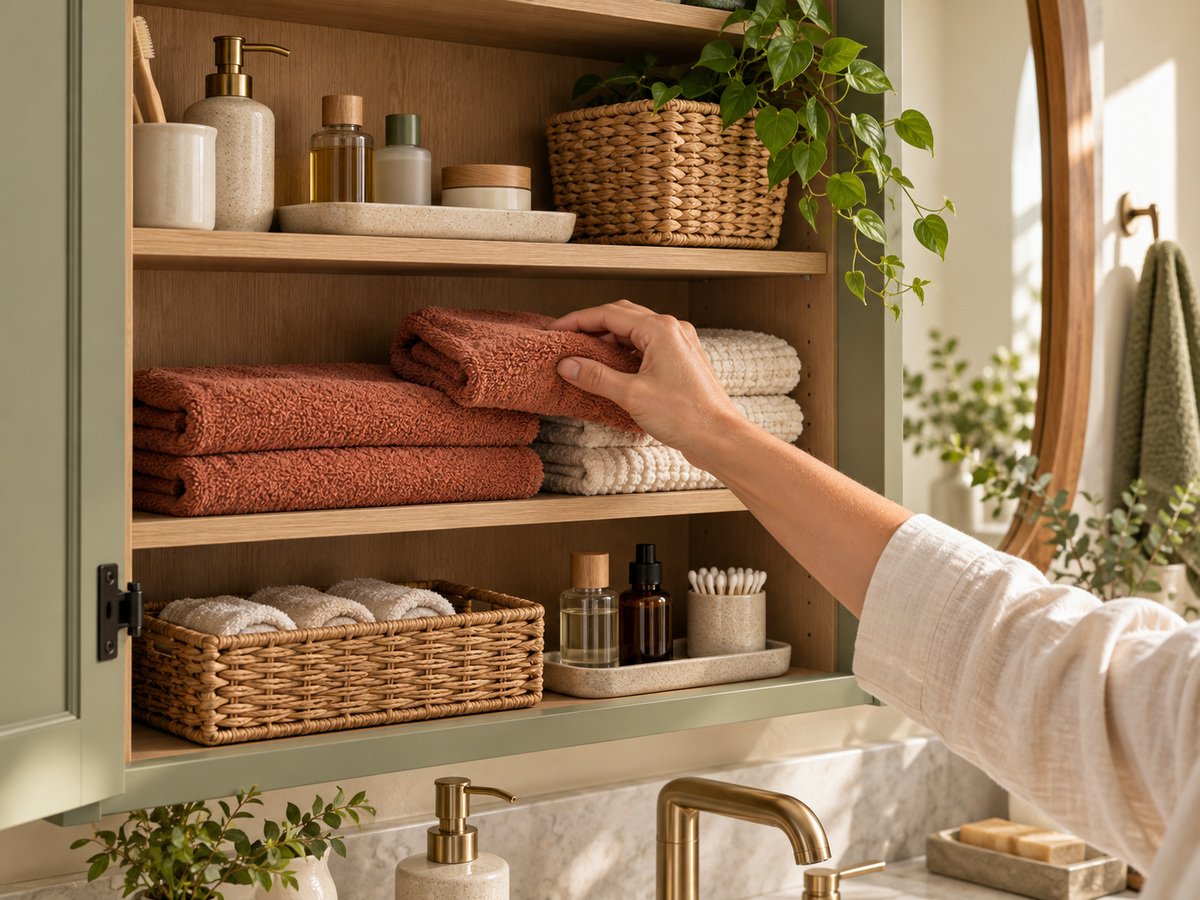
1. Separate daily use from backup stock
Keep the items used every morning between comfortable hand and eye height. Backups can move higher or deeper, but their quantity should remain visible. Remove expired products and medicines you no longer use according to local disposal guidance.
2. Create dry, damp and wet zones
Paper goods, electronics and medicines need a dry location. Towels need airflow. Shower products need drainage and a surface the mounting method actually supports. Do not make one basket serve all three conditions.
Daily zone
Open, reachable and simple to return.
Backup zone
Visible quantity without crowding the active supply.
Wet zone
Drainable, cleanable and compatible with the surface.
3. Protect maintenance access
Leave shutoff valves and drain fittings visible. Use removable trays under liquids and avoid filling the cabinet so tightly that a small leak stays hidden. In the shower, leave gaps around bottles so shelves can drain and surfaces can dry.
4. Assign one product family to one friction
Use a pull-out caddy for deep cabinet retrieval, an over-toilet unit for unused vertical space, a shallow wall cabinet when floor area is scarce, and a shower caddy only for products used in the wet zone. The lowest-maintenance solution is usually the one that solves one repeated problem well.