The best closet systems for
different spaces and renters
A closet system should solve the way you store and retrieve clothes, not simply fill a wall. Start with an expandable frame when width may change, wall-mounted storage when the floor must stay open, or a wider frame when separate hanging and folded zones matter. This comparison connects each arrangement to its trade-offs, then uses documented examples to show what to verify. Decide on the useful layout first: a larger frame or advertised load cannot compensate for inaccessible clothes.
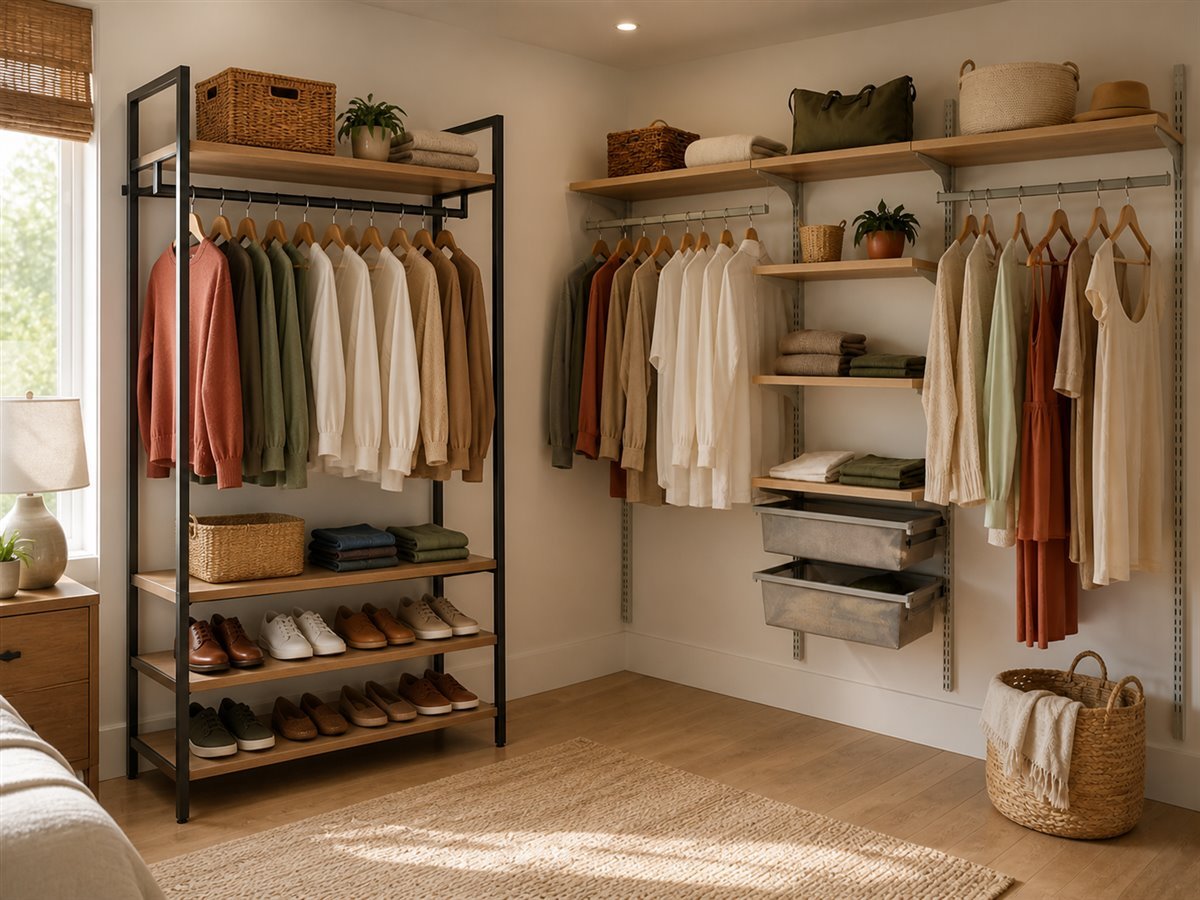
Find the layout that solves your problem
Use the examples to narrow a decision, not to buy every organizer shown. Each case explains its benefit, a reason to reconsider, and a practical way to test the idea with what you already own.
Quick picks by need
VIPEK X20
Its manufacturer-stated width adjusts from 39 to 56 inches while depth stays 15.7 inches, useful when exact wall width is the main constraint.
Why it fits ↓Rubbermaid Configurations
Multiple kit ranges, adjustable shelves and rods, and no-cut configurations make it easier to adapt after installation.
Why it fits ↓VIPEK V5
A fixed 68.9-inch width combines four rods with eight shelves for rooms that need both hanging and folded storage.
Why it fits ↓VIPEK S3
Its documented arrangement adds six shoe shelves, making the trade-off between shoes and hanging space explicit.
Why it fits ↓Comparison table
| System | Installation | Documented fit | Storage mix | Primary trade-off |
|---|---|---|---|---|
| VIPEK X20Best fit range | Freestanding | 39–56 W × 15.7 D × 76.4 H in | 2 shelves, 2 rods | Fewer zones than wider frames |
| Rubbermaid ConfigurationsBest wall-mounted | Wall-mounted track | Kit-specific; 4–8 ft model requires at least 14 in depth | Adjustable wire shelves and rods | Correct wall installation required |
| VIPEK V5 | Freestanding | 68.9 W × 15.7 D × 76.4 H in | 8 shelves, 4 rods | Fixed, wide footprint |
| VIPEK S3 | Freestanding | 68.9 W × 15.7 D × 76.4 H in | 6 wire shelves, 6 shoe shelves, 3 rods | Shoe zones reduce general shelf flexibility |
We compare access, storage mix, and installation conditions. Named systems are documentary examples, not a universal ranking or a record of hands-on testing. Manufacturer-stated dimensions refer to the specified variant; load claims are not independent test results. There are no active affiliate links, copied star ratings, or static prices.
Illustrations explain typical situations, not the exact appearance, dimensions, hardware, or safe installation of the named products. Use the current instructions and labeled diagram for your selected variant.
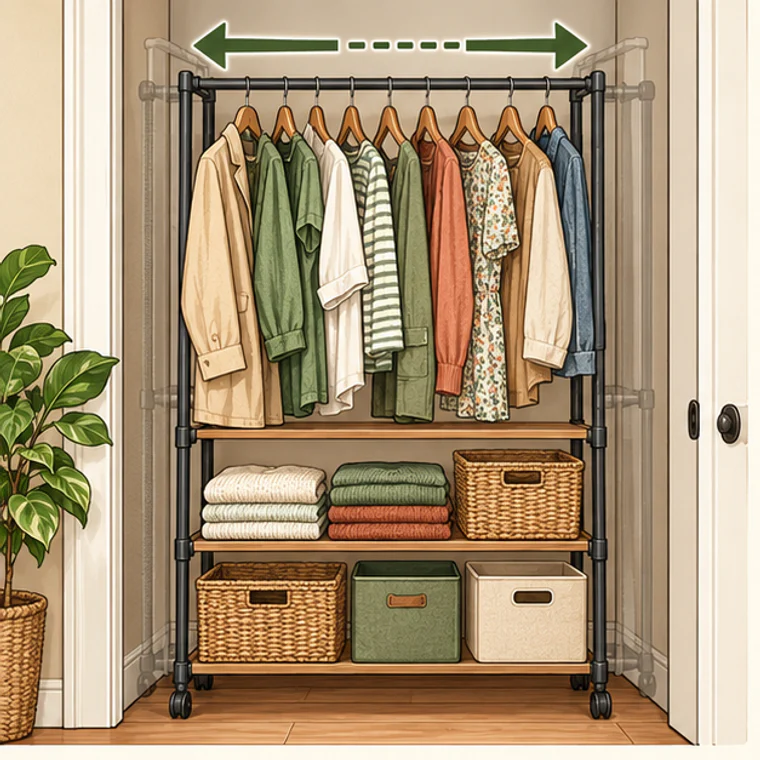
Expandable frame — when width is the constraint
The horizontal arrow explains width adjustment, not another hanging level. A simpler frame can suit a changing room without creating many separate categories.
Documented example — VIPEK X20: VIPEK documents an adjustable width of 39–56 inches, 15.7-inch depth, and 76.4-inch height. Two rods and two shelves expand, and the manufacturer describes locking mechanisms intended to prevent overextension.
- Useful when
- A narrow or changing wall needs a simple hanging layout.
- Reconsider when
- You need several independent hanging and folded zones.
VIPEK X20 — best when width may change
Trade-offs: the compact configuration supplies fewer separate storage zones than V5 or S3. The manufacturer states that it can be used without wall anchoring and also lists anti-tip devices; buyers should follow the exact instructions supplied with their variant rather than generalizing from the product page.
Check before buying: ceiling clearance, final locked width, leveling, garment length, and whether two shelf zones are enough.
Try it before choosing
- Try this
- Hang a typical group of shirts and measure its span without crushing sleeves.
- What it reveals
- If it fills the proposed rail, width adjustment alone will not accommodate the remaining categories.
- What to change or look for
- Look for a separate long-hang bay or more subdivisions, rather than stretching beyond the frame's locks.
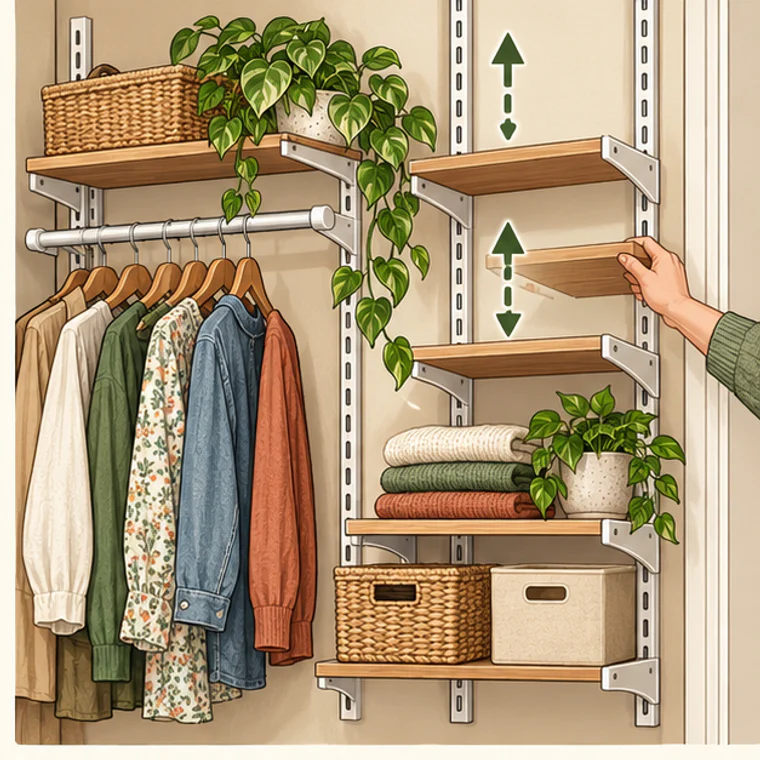
Wall-mounted rails — when the floor should stay open
The uprights separate shelves and hanging while leaving lower floor space available. A hamper or shoe zone can move without working around frame feet.
Documented example — Rubbermaid Configurations: Rubbermaid documents multiple width kits. Its 4–8 ft kit uses overlapping rails and expandable shelving, requires at least 14 inches of closet depth, includes mounting hardware, and can be reconfigured without tools after installation.
- Useful when
- Your wall permits installation and the storage mix may change.
- Reconsider when
- You need to relocate frequently or mounting conditions are unresolved.
Rubbermaid Configurations — best wall-mounted flexibility
Trade-offs: wall type, fastening, level, and rental permission are non-negotiable. The packaged product dimensions shown on a retail page are not the same as the installed fit range; use the fit statement and manual for the selected size.
Check before buying: exact kit range, usable depth, stud/anchor requirements, shelf arrangement, and whether wire shelving suits small items.
Try it before choosing
- Try this
- Draw one current and one future layout using the kit's actual parts.
- What it reveals
- A second arrangement may require extra rods or standards, not just repositioning.
- What to change or look for
- Check compatible accessories and approved positions instead of assuming every displayed part is included.
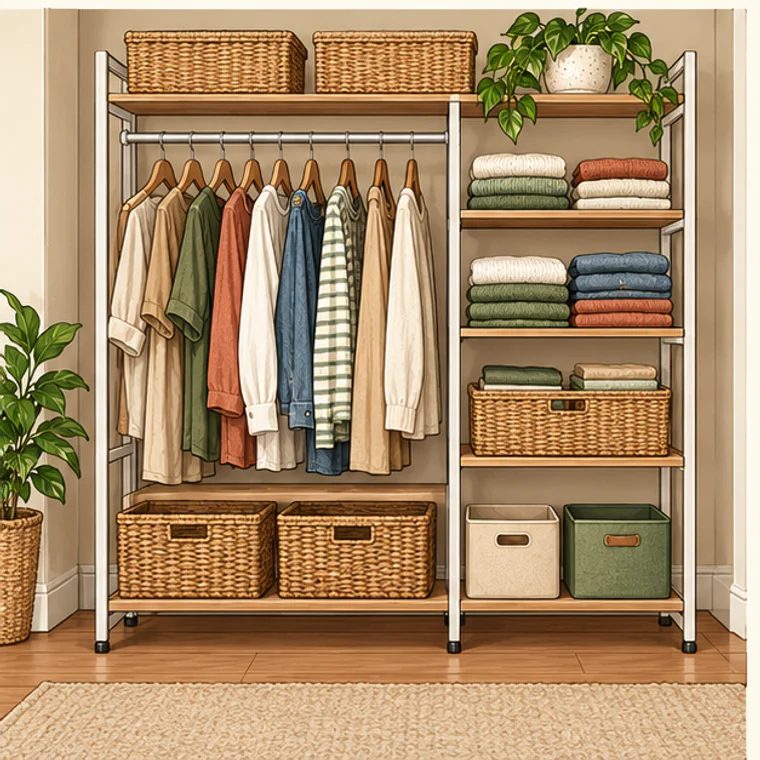
Balanced frame — share the wall between clothing categories
Distinct bays keep folded stacks from taking over hanging space. A lower rod is useful only where upper garments leave it accessible.
Documented example — VIPEK V5: the manufacturer lists a 68.9 × 15.7 × 76.4-inch frame with four hanging rods and eight adjustable shelves. That mix makes it easier to divide long hang, short hang, bags, bins, and folded clothes.
- Useful when
- A wide wall must serve hanging, folded clothing, and accessories.
- Reconsider when
- The opening hides outer bays or most garments are long.
VIPEK V5 — best documented balance of hanging and shelves
Trade-offs: it needs almost 69 inches of uninterrupted width and occupies the floor continuously. VIPEK’s total load number is a manufacturer claim, not an instruction to load every zone indiscriminately.
Check before buying: baseboard projection, ceiling, the location of long garments, floor level, and the current assembly/safety instructions.
Try it before choosing
- Try this
- Mark the hems of a coat and a shirt on your planned layout.
- What it reveals
- A lower rail contributes little when the clothes above cover it.
- What to change or look for
- Reserve uninterrupted long hang, then allocate short-hang and folded bays.
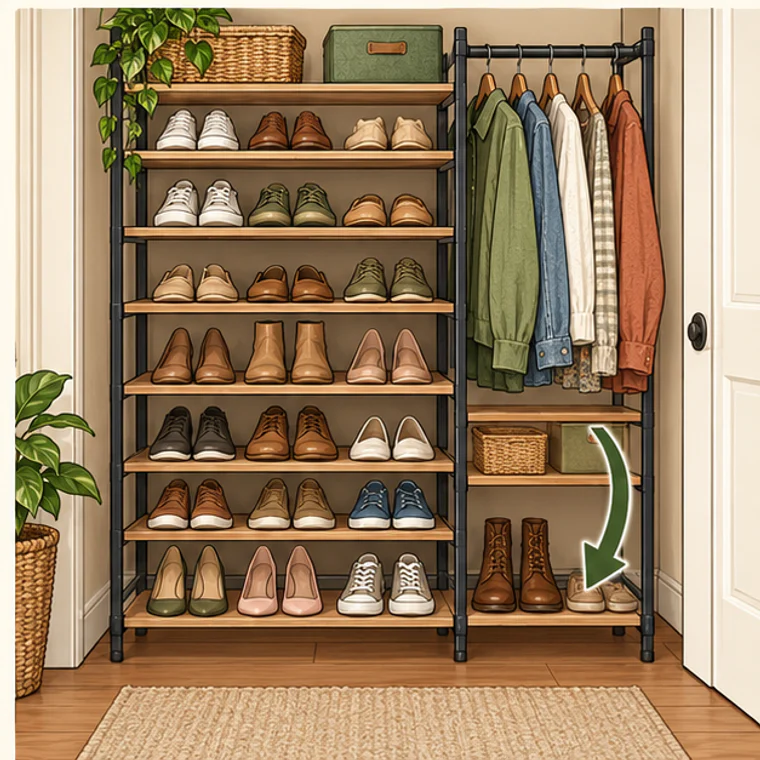
Shoe-focused frame — give footwear reachable levels
The lower shoe bay makes pairs visible without piling them in the opening. Shoe storage is a deliberate trade-off against other shelf or hanging uses.
Documented example — VIPEK S3: VIPEK documents the same general 68.9 × 15.7 × 76.4-inch envelope as V5 but lists six wire shelves, six shoe shelves, and three rods. One shoe section can be omitted to create room for boots.
- Useful when
- Shoes repeatedly clutter the floor.
- Reconsider when
- Boots or large pairs do not suit the proposed spacing.
VIPEK S3 — best for a shoe-heavy wardrobe
Trade-offs: category-specific shelves reduce flexibility if the wardrobe changes. Shoe fit still depends on actual footwear dimensions.
Check before buying: longest and widest shoes, boot height, rod placement, and whether the current variant matches the documented layout.
Try it before choosing
- Try this
- Arrange a normal row including the widest pair and remove a pair from the middle.
- What it reveals
- A packed display may require moving neighboring shoes during retrieval.
- What to change or look for
- Check shelf depth, clear width, hand space, and removable levels instead of relying on a pair-count claim.
Which should you choose?
- Choose X20 when the wall is narrow or future width flexibility matters most.
- Choose Rubbermaid Configurations when mounting is appropriate and open floor space is valuable.
- Choose V5 when a wide freestanding system needs a balanced set of rods and shelves.
- Choose S3 when shoe storage is a defining requirement rather than an accessory.
Before shortlisting any of them, complete the measurement guide. For installation-specific alternatives, compare freestanding and wall-mounted systems separately.
Frequently asked questions
These answers apply our documented review method to the fit questions readers ask most often.
Which closet system type usually makes more sense for renters?
A freestanding system usually avoids permanent wall work and is easier to move, but tall or narrow furniture may still require restraint. Check the lease and the exact product instructions before assuming that no anchoring is needed.
Is a wall-mounted system always more space-efficient?
It can keep more floor area open and allow later reconfiguration, but usable capacity still depends on wall width, returns, doors, shelf depth, studs, hardware, and the storage mix. A system that cannot be installed correctly is not an efficient fit.
Is the biggest frame the best value?
Not if its outer bays are hidden behind returns or its rods do not match your clothes. Compare reachable storage with the footprint you give up; a smaller accessible layout can be more useful.