Small closet organization ideas that preserve usable space
A small closet improves when each zone has one clear job. Fix visibility and reach first, then add only the structure that solves a measured bottleneck.
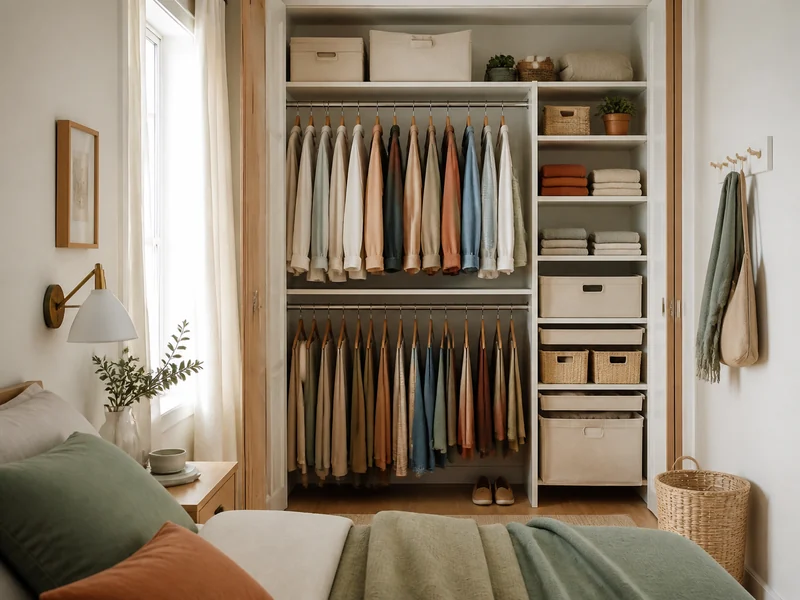
Editorial illustration; no capacity claim is implied.
1. Find the actual bottleneck
Photograph the closet before changing it. Is the rail packed, are folded stacks collapsing, are shoes consuming the opening, or is the top shelf unreachable? Buying a general “organizer” before naming the bottleneck usually adds another object without improving access.
2. Separate long and short hanging
Group long garments together and measure their drop. A double-hang zone may work under shirts and jackets, while coats and dresses keep a full-height section. Do not use a generic rod-height rule; measure your garments and compare them with the system’s adjustment range.
3. Keep daily items inside the easy-reach zone
The center of the opening is premium space. Place everyday clothes and accessories there. Seasonal or occasional items can move to high shelves, side returns, or labeled containers. This is often more useful than maximizing the number of shelves.
4. Make deep shelves behave like drawers
A contained bin can bring the back of a shelf forward, but it must be light enough to remove safely and short enough to clear the opening. Label the front and leave a handhold. Heavy items belong lower, not above head level.
5. Protect the doorway
Sliding and bi-fold doors can block drawers, baskets, or side shelves. Before adding anything that moves, tape its projected open position on the floor. If it crosses the door track or cannot clear the return, use open shelves or removable bins instead.
6. Use the floor deliberately
The floor is useful for a low shoe shelf, hamper, or a small set of drawers—but not all three. Leave enough room to reach items above and avoid building a pile in front of the system. If a tall unit occupies the floor, follow its anti-tip instructions.
7. Use doors only when movement still works
Over-door storage can be effective for light accessories when it does not interfere with hinges, closing, trim, or wall contact. Check the organizer thickness plus the contents, not the empty organizer alone.
8. Standardize containers by shelf, not by trend
Measure the clear shelf opening and choose a small number of repeatable sizes. Leave enough tolerance to remove each container without scraping. Opaque bins conceal visual noise; clear bins improve identification. Labels help either type.
9. Rotate seasonal volume
Seasonal rotation works when there is a defined destination for off-season items. Use upper shelves or another storage zone and set a review date. Vacuum bags can change volume, but the compressed package still needs a measured home and the contents must be suitable for that method.
Three simple layout patterns
| Closet problem | Layout | Avoid |
|---|---|---|
| Mostly short garments | Double hang + narrow full-height section + top shelf | Blocking the lower rail with floor bins |
| More folded clothes | Shelves or contained bins near center + one hanging zone | Stacks taller than you can remove cleanly |
| Mixed clothes and shoes | Hanging centered, shallow shoe zone low, accessories in a narrow side area | Wide drawers that cannot clear the door |
What not to buy yet
- Drawer towers before measuring the clear opening and pull-out depth.
- Hanging shelves before checking the rod load and lost hanging length.
- Identical bins for shelves with different usable dimensions.
- A complete system when moving the existing rail or shelf would solve the bottleneck.
For a structural change, first measure the closet, then use the closet-system decision guide. If folded storage is the main issue, compare drawers and shelves.